


By the five2one team
Nice is the fifth-largest city in France and the heart of the French Riviera. Its airport sits at the edge of the city, and from Copenhagen, direct flights take around two and a half hours. It is a city of old streets and wide sea views, with a history that goes back more than two thousand years. It is also where you will find one of our homes, in a Belle Époque building in the centre.
This guide is for anyone about to spend their holidays here, or deciding whether Nice is the place they want to return to, year after year.
From Nikaia to the Riviera
Nice began around 350 BC, when Greeks from Marseille founded a settlement they called Nikaia. The Romans later built their own town, Cemenelum, on the hill that is now the district of Cimiez, where its ruins can still be visited.
In 1388, Nice placed itself under the protection of the Counts of Savoy, and for most of the next five centuries it looked towards the Alps and Italy more than towards Paris. It became part of France for good in 1860, after the Treaty of Turin.
By then, the city had already found a new role. From the second half of the 18th century, wealthy English families came to spend the winter here, and in 1823 the seafront walk they helped create was named the Promenade des Anglais. That winter-resort history is now recognised by UNESCO: since 2021, “Nice, Winter Resort Town of the Riviera” has been a World Heritage Site.
The neighbourhoods
Nice changes character every few streets.
- Vieux Nice, the old town, is a maze of narrow streets, small squares and ochre façades. At its edge, the Cours Saleya hosts the city’s best-known market.
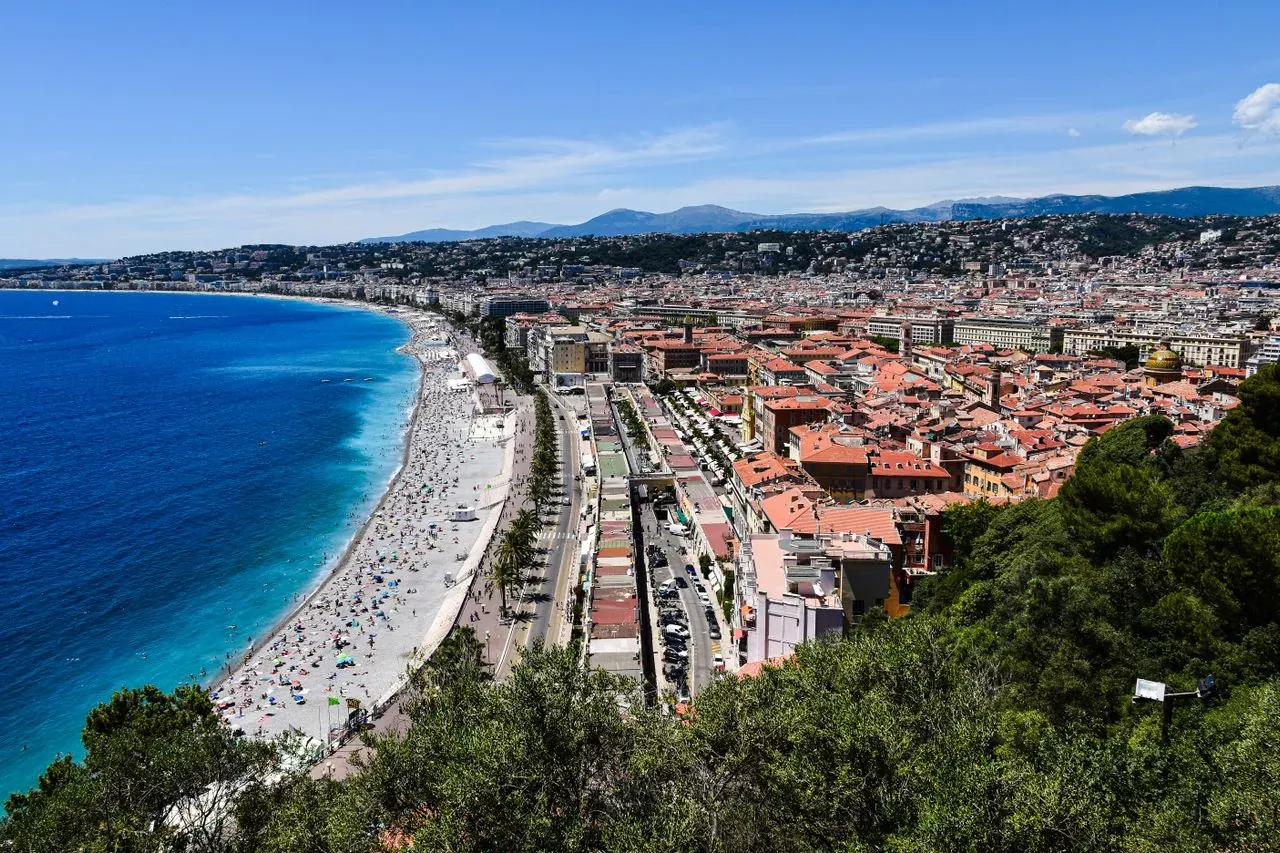
- Castle Hill rises between the old town and the port, with gardens and one of the best views over the Baie des Anges.
- The port, Port Lympia, is the city’s working harbour, with cafés and restaurants around the water.
- Cimiez, on the hill above the centre, is quieter and greener, with Roman ruins and the Musée Matisse.
- The Promenade des Anglais runs along the whole bay, the place where the city comes to walk, run, cycle and watch the sea.
A day in Nice
Nice is a city best lived on foot.
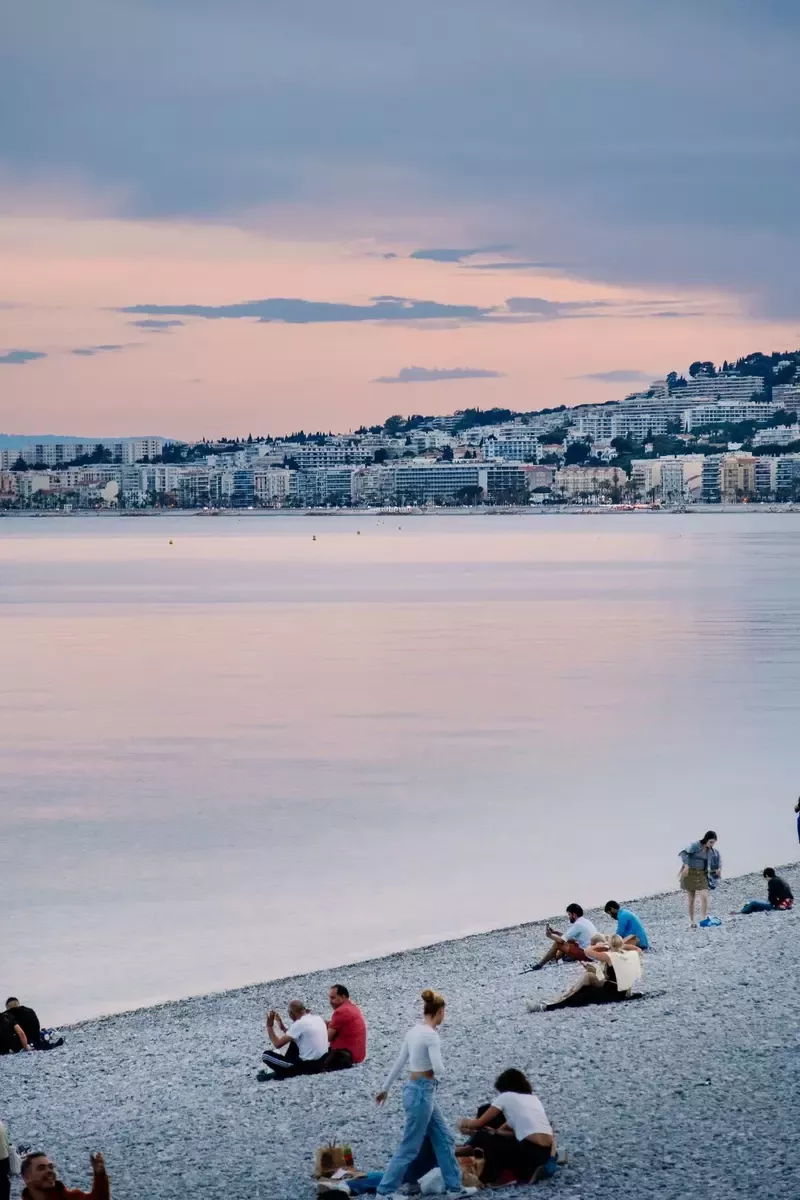
A morning might start at the market on the Cours Saleya, with coffee in the old town before it fills up. By late morning, the sea is a few minutes’ walk away, with the pebble beaches and clear water of the Baie des Anges.
In the afternoon, there is a museum on the hill in Cimiez, or the climb up Castle Hill for the view. Evenings belong to the Promenade and the terraces of the old town, where dinner is the main event of the day.
Beyond Nice
Nice is also a base for the rest of the Riviera. The coast east and west of the city is lined with towns and villages that make easy day trips, from hilltop villages to seaside towns and Monaco, all within reach by train or car. For an afternoon of art, the Musée Marc Chagall is in Nice itself.
Nice through the seasons
Nice has a Mediterranean climate with mild winters, which is exactly why it became a winter resort in the first place.
Spring and autumn are ideal for walking the city and the coast. Summer is for the sea and long evenings outside. In winter, the light is clear, the city is calmer, and the reason the English came here two centuries ago still makes sense.
With 10 weeks a year in a five2one home, it is worth looking beyond July and August.
Getting there and around
Nice Côte d’Azur Airport is about 15 minutes from the centre by car. Tram line 2 links the airport with the city centre and the port, and there are direct flights from Copenhagen.
Once in the city, the tram, the train and your own feet are usually all you need.
Who would enjoy Nice?
Nice suits people who want a real city by the sea: markets, museums, restaurants and the Promenade, all within walking distance. It works well for couples and families who enjoy culture as much as the beach, and for anyone who likes to explore the wider Riviera from one base.
It might not be a great match for people looking for sandy beaches or a quiet village life. Nice’s beaches are pebble, and the centre is lively, cosmopolitan and full of character. For many, that city energy by the sea is exactly the appeal.
Frequently asked questions
What is Nice known for?
Nice is known for the Promenade des Anglais, its old town and markets, and its long history as a winter resort, recognised by UNESCO in 2021. It is also a city of art, with museums dedicated to Matisse and Chagall, and the natural base for exploring the French Riviera.
Can you explore the Riviera from Nice without a car?
Yes. Regional trains run along the coast from Nice, which makes towns such as Villefranche-sur-Mer, Antibes and Monaco easy day trips. In the city itself, the tram and your own feet are usually enough.
A five2one home in Nice
Each five2one home is shared by 5 families, each holding a 20% share and 10 weeks a year. It is real co-ownership, and professional management takes care of the practical side, so your holidays start the moment you arrive.
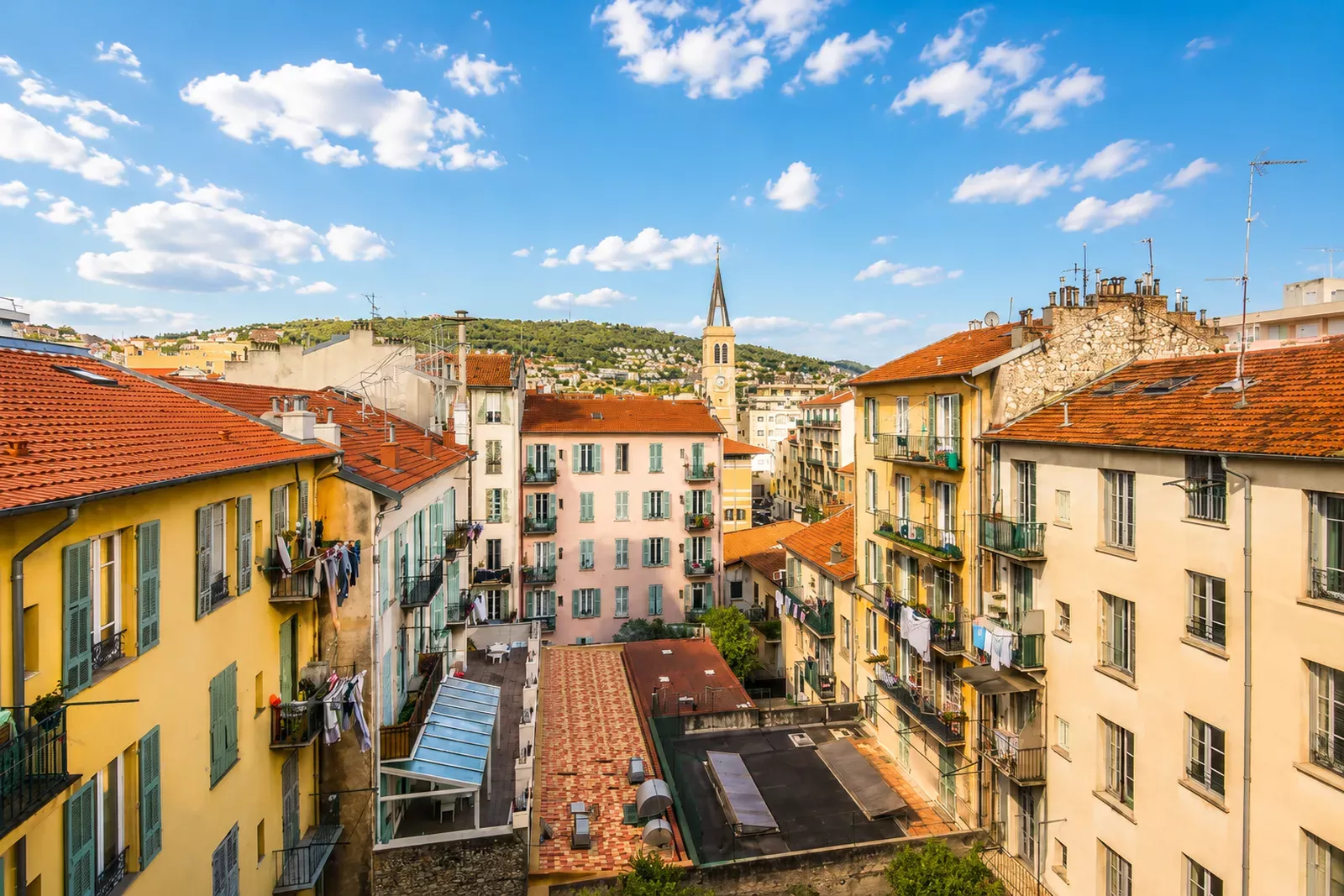
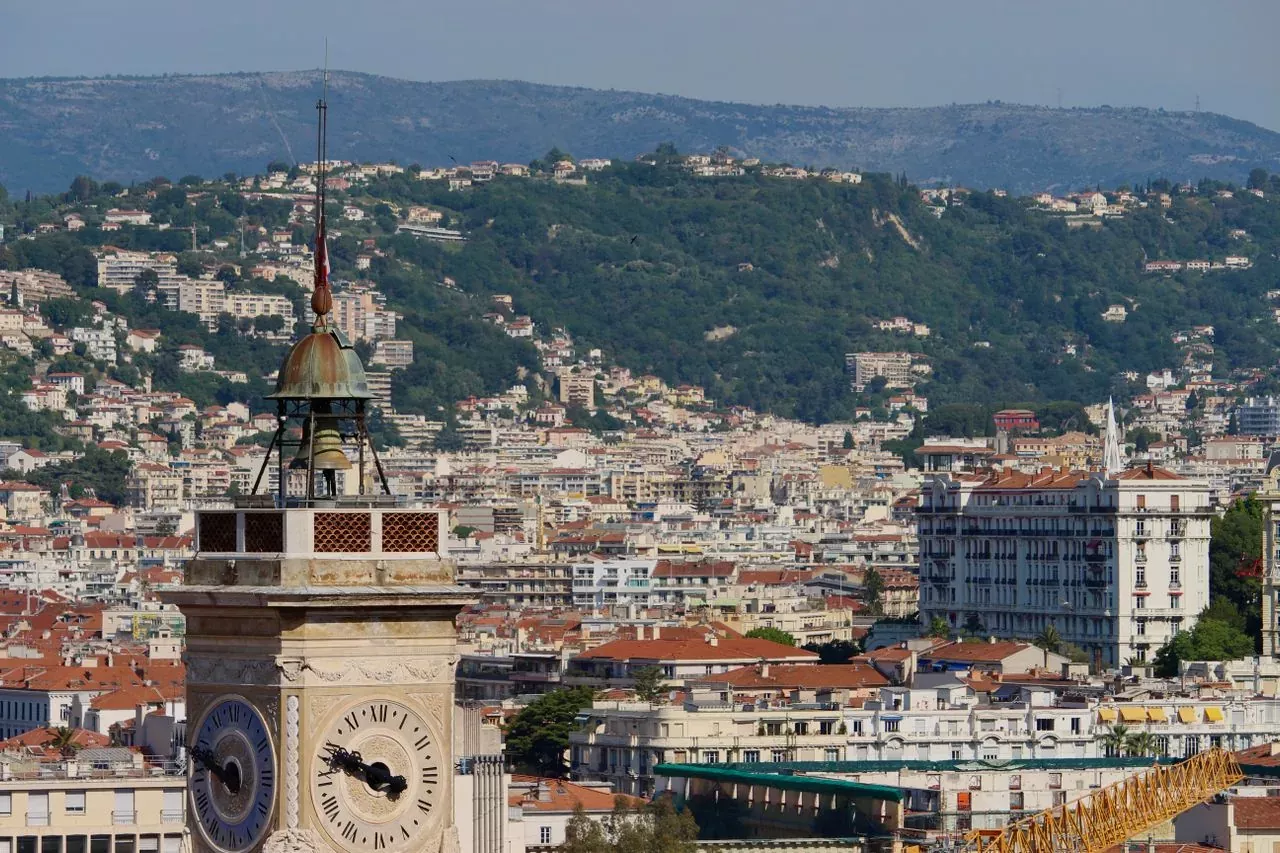
- City apartment in the heart of Nice: two bedrooms in a fully renovated Belle Époque building, with a balcony over the rooftops and the basilica bell tower in view. The Promenade des Anglais and Nice-Ville station are both around seven minutes away on foot, and the old town is a short walk.